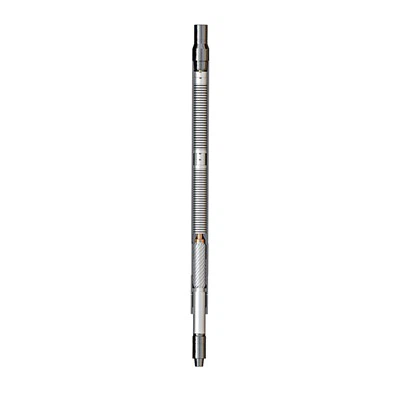
The drive works by converting the input signal into a control signal that the motor can understand and drive the motor to work. The specific process includes the following steps:
Signal conversion: The drive first receives the input signal, which may be an analog signal or a digital signal, indicating the required speed, position or torque information. Then, the circuit inside the drive converts these input signals into motor control signals. For different types of motors, such as DC motors and AC motors, the signal conversion method will also be different. For example, for DC motors, it may involve converting analog signals into PWM (pulse width modulation) signals; while for AC motors, it may involve converting the input signal into a three-phase voltage.
Power amplification: The converted control signal is usually weak in strength and not enough to drive the motor directly. Therefore, the drive contains a power amplifier circuit inside, which can enhance the strength of the signal to reach a power level suitable for driving the motor. Power amplification is usually achieved through power electronic devices (such as transistors, MOSFETs or IGBTs).
Control output: After completing signal conversion and power amplification, the drive sends the drive signal to the motor through the control output circuit to control the operation of the motor. This includes controlling parameters such as the speed, direction and torque of the motor.
Protection and monitoring: The driver also contains protection circuits to prevent abnormal conditions such as overload, overheating or overcurrent during the operation of the motor. At the same time, the driver also monitors the status of the motor, such as current, voltage and temperature, to ensure the safe operation of the motor. Once an abnormal condition is detected, the protection circuit will promptly cut off the power supply or take other protective measures.
In addition, for different types of motor drivers, such as servo drivers, stepper motor drivers, etc., their working principles and technical characteristics will also be different. For example, the servo driver and servo motor constitute a servo drive system, which achieves high-precision control of the motor by receiving control signals from the upper level and feedback signals from the encoder; while the stepper motor driver controls the rotation speed and angular displacement of the motor by controlling the frequency and number of pulses.
In summary, the working principle of the driver is a complex and delicate process involving multiple links such as signal conversion, power amplification, control output, protection and monitoring. Through the organic cooperation of these links, the driver can accurately control the operating status of the motor to meet the needs of various industrial and consumer electronic devices.